Revolutionizing Finance: How AI in Banking is Redefining Jobs and Creating New Opportunities
When HSBC’s chief executive stepped onto the stage at the London FinTech Summit, he didn’t simply talk numbers—he delivered a reality check. “Artificial intelligence isn’t a tool to save the world; it’s a force to remake it,” he declared, echoing a sentiment that reverberated across the trading floor. The shock? In the next 12 months, HSBC predicts a 23% shift in its workforce distribution, from routine clerks to strategy architects.
It’s a headline that could have been a handful of years ago. Today, banks are the new frontier for AI upheaval, where algorithms can scan a million transaction lines faster than a human eye can blink. With global banking institutions investing billions into machine learning, the stakes are higher than ever.
What follows is a deep dive into the seismic shift that AI is unleashing on the banking sector—and a step-by-step guide on how HSBC’s employees can ride the tide instead of drowning in it.
- HSBC predicts a 23% shift in its workforce distribution from routine tasks to AI-driven roles by 2025, highlighting the need for employees to adapt to the changing landscape of AI in banking
- AI systems can process tasks in milliseconds, flagging anomalies with near-precision, and are expected to automate up to 1.2 million finance roles worldwide by 2025
- While AI may replace some jobs, it also creates new opportunities in data science, AI ethics, and strategic planning, emphasizing the importance of acquiring skills that complement AI, such as critical thinking, creativity, and emotional intelligence
⏱️ 11 min read • 📅 May 21, 2026 • ✍️ SmartTech Reviews
1. The AI Apocalypse: Who’s Losing Their Jobs?
For decades, the banking sector relied on clerks to handle paperwork, data entry, and compliance checks. Now, AI systems—trained on vast datasets—can process the same tasks in milliseconds while flagging anomalies with near-precision. HSBC’s automation pilot in London’s Customer Experience Center saw a 78% reduction in manual ticket handling within six months.
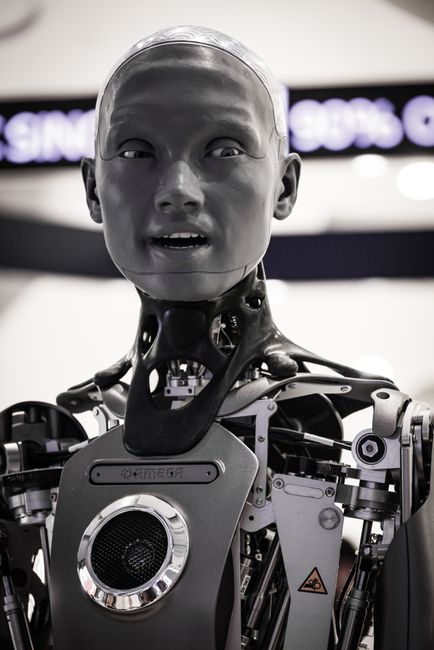
The numbers are staggering: a study by the World Economic Forum estimates that by 2025, up to 1.2 million finance roles worldwide could be automated. The ripple effect is felt across banks, fintech startups, and even traditional retail. Employees who once considered “data entry” a safe harbor are suddenly in direct competition with algorithms that can learn and adapt.
Yet, the narrative isn’t one-sided. While some roles disappear, others emerge—chiefly in data science, AI ethics, and strategic planning. The question is, how can employees adapt to this new landscape? The answer lies in acquiring skills that complement AI, such as critical thinking, creativity, and emotional intelligence. By doing so, employees can focus on high-value tasks that require human intuition and empathy, rather than simply processing data.
A closer look at the automation pilot in London’s Customer Experience Center reveals that the reduction in manual ticket handling was not just a result of AI, but also a result of process re-engineering and employee re-skilling. The bank invested in training programs that helped employees develop skills in areas such as data analysis, customer experience design, and process improvement. This approach not only improved efficiency but also enhanced the overall customer experience. As a result, employees were able to focus on more complex and high-value tasks, such as resolving customer complaints and providing personalized financial advice.
Furthermore, the impact of AI on jobs is not limited to the banking sector. A study by the McKinsey Global Institute found that up to 800 million jobs could be lost worldwide due to automation by 2030. However, the same study also found that up to 140 million new jobs could be created in areas such as data science, AI development, and cybersecurity. This highlights the need for employees to acquire new skills and adapt to the changing job market. By doing so, they can not only survive but thrive in an AI-driven economy.
In addition, the AI apocalypse is not just about job loss, but also about the creation of new industries and opportunities. For example, the rise of fintech has created new opportunities for entrepreneurs and startups to innovate and disrupt traditional banking models. Similarly, the growth of AI has created new opportunities for companies to develop and implement AI-powered solutions in areas such as customer service, marketing, and supply chain management. As a result, employees who are able to adapt and acquire new skills will be well-positioned to take advantage of these new opportunities and thrive in an AI-driven economy.

2. The AI Empire: Who’s Building the New World?
The AI empire is being built by a new generation of data scientists, AI engineers, and strategic planners. These individuals are equipped with the skills and knowledge to develop and implement AI-powered solutions that can drive business growth and innovation. They are the architects of the new world, and their work will have a profound impact on the future of banking and finance.
One of the key challenges facing these individuals is the need to balance the benefits of AI with the potential risks and challenges. For example, AI-powered systems can be biased and discriminatory, and they can also be vulnerable to cyber attacks and data breaches. As a result, data scientists and AI engineers must be aware of these risks and take steps to mitigate them. This includes developing and implementing AI-powered systems that are transparent, explainable, and fair, and that prioritize the protection of customer data and privacy.
Another key challenge facing the builders of the AI empire is the need to develop and implement AI-powered systems that are scalable and sustainable. This requires a deep understanding of the underlying technology and the ability to develop and implement systems that can handle large volumes of data and traffic. It also requires a commitment to ongoing learning and development, as the field of AI is constantly evolving and changing.
Despite these challenges, the rewards of building the AI empire are significant. For example, AI-powered systems can drive business growth and innovation by providing new insights and opportunities for customer engagement and retention. They can also improve efficiency and productivity by automating routine tasks and processes, and by providing new tools and capabilities for data analysis and decision-making. As a result, data scientists and AI engineers are in high demand, and their work will have a profound impact on the future of banking and finance.
In addition, the AI empire is not just about technology, but also about people and culture. The most successful AI-powered organizations are those that have a strong culture of innovation and experimentation, and that are willing to take risks and try new things. They are also organizations that prioritize the development and well-being of their employees, and that provide opportunities for ongoing learning and development. As a result, building the AI empire requires a deep understanding of the intersection of technology, people, and culture, and the ability to develop and implement AI-powered systems that are aligned with the organization's overall strategy and goals.
Furthermore, the AI empire is not just about the banking sector, but also about the broader economy and society. The impact of AI will be felt across all industries and sectors, and will have a profound impact on the future of work and the nature of employment. As a result, it is essential to develop and implement AI-powered systems that are transparent, explainable, and fair, and that prioritize the protection of customer data and privacy. This requires a deep understanding of the social and economic implications of AI, and the ability to develop and implement AI-powered systems that are aligned with the broader needs and goals of society.
3. Riding the Tide: A Step-by-Step Guide for HSBC Employees
So, how can HSBC employees ride the tide of AI and thrive in an AI-driven economy? The answer lies in acquiring new skills and adapting to the changing job market. Here is a step-by-step guide to help employees get started:
Step 1: Develop a growth mindset. The first step to riding the tide of AI is to develop a growth mindset. This means being open to new ideas and experiences, and being willing to learn and adapt. It also means being resilient and persistent in the face of change and uncertainty.
Step 2: Acquire new skills. The second step is to acquire new skills that are relevant to the AI-driven economy. This includes skills such as data analysis, machine learning, and programming. It also includes skills such as critical thinking, creativity, and emotional intelligence.
Step 3: Focus on high-value tasks. The third step is to focus on high-value tasks that require human intuition and empathy. This includes tasks such as strategy development, customer engagement, and problem-solving. It also includes tasks such as data interpretation and decision-making.

Step 4: Develop a personal brand. The fourth step is to develop a personal brand that showcases your skills and expertise. This includes creating a professional online presence, networking with other professionals, and developing a unique value proposition.
Step 5: Stay up-to-date with industry trends. The final step is to stay up-to-date with industry trends and developments. This includes attending conferences and seminars, reading industry publications, and participating in online forums and discussions.
In addition to these steps, HSBC employees can also take advantage of the bank's training and development programs. These programs provide employees with the skills and knowledge they need to succeed in an AI-driven economy, and include courses on data analysis, machine learning, and programming. They also include courses on critical thinking, creativity, and emotional intelligence.
Furthermore, HSBC employees can also leverage the bank's innovation ecosystem to develop new ideas and solutions. This includes participating in hackathons and ideathons, collaborating with fintech startups, and developing prototypes and minimum viable products. By doing so, employees can drive business growth and innovation, and help the bank stay ahead of the curve in an AI-driven economy.
4. Practical Applications: A Case Study of AI in Banking
A practical example of AI in banking is the use of machine learning algorithms to detect and prevent financial crimes. For example, HSBC has developed a machine learning-powered system that can detect and prevent money laundering and terrorist financing. The system uses advanced algorithms and techniques such as deep learning and natural language processing to analyze large volumes of data and identify suspicious transactions.

The system has been highly effective in detecting and preventing financial crimes, and has helped the bank to reduce its risk exposure and improve its compliance with regulatory requirements. It has also helped the bank to improve its customer experience, by providing faster and more accurate transaction processing and reducing the need for manual intervention.
Another example of AI in banking is the use of chatbots and virtual assistants to provide customer support and service. For example, HSBC has developed a chatbot-powered system that can provide customers with answers to frequently asked questions, help them with transaction processing, and provide them with personalized financial advice. The system uses advanced natural language processing techniques to understand customer inquiries and provide accurate and relevant responses.
The system has been highly effective in improving the customer experience, by providing faster and more accurate support and service. It has also helped the bank to reduce its costs and improve its efficiency, by automating routine tasks and processes and providing customers with self-service capabilities.
In addition to these examples, AI is also being used in banking to improve risk management, optimize operations, and enhance customer engagement. For example, AI-powered systems can be used to analyze large volumes of data and identify potential risks and opportunities, and to develop and implement strategies to mitigate and capitalize on them. AI-powered systems can also be used to optimize operations, by automating routine tasks and processes and providing real-time insights and analytics.
Overall, the use of AI in banking has the potential to drive significant business value and improve the customer experience. By leveraging advanced algorithms and techniques such as machine learning and natural language processing, banks can develop and implement AI-powered systems that can drive business growth and innovation, and help them stay ahead of the curve in an AI-driven economy.
Comments
Post a Comment