Revolutionizing Industrial Safety: How IoT and AI are Saving Lives and Improving Productivity
More than 10,000 workers die every year in the United States alone due to workplace accidents, with another 3 million suffering from work-related injuries. These staggering statistics highlight the pressing need for enhanced industrial safety measures, and it's in this context that Telefónica and Halotech are pioneering the integration of IoT and AI to transform the face of industrial safety.
The industrial sector has long been plagued by the challenge of ensuring worker safety amidst increasingly complex operations. The conventional approach to safety often relies on manual monitoring and reactive responses to accidents, which is not only ineffective but also puts workers at greater risk. With the advent of IoT and AI, Telefónica and Halotech are pioneering a paradigm shift in industrial safety, enabling real-time monitoring, predictive analytics, and proactive interventions to mitigate the risk of accidents.

In this article, we delve into the revolutionary work of Telefónica and Halotech, exploring how their innovative IoT and AI-powered solutions are revolutionizing industrial safety and creating a safer, more efficient, and more productive work environment.
- Telefónica and Halotech's IoT and AI-powered solutions have achieved a 25% reduction in workplace accidents, highlighting the effectiveness of this approach in improving industrial safety.
- The integration of IoT and AI in industrial safety provides real-time monitoring, predictive analytics, and proactive interventions, enabling early detection and prevention of potential hazards.
- By leveraging sensor data, machine learning algorithms, and advanced analytics, IoT and AI-powered solutions improve operational efficiency, productivity, and worker safety in the industrial sector.
⏱️ 5 min read • 📅 June 12, 2026 • ✍️ SmartTech Reviews

The Rise of IoT and AI in Industrial Safety
[SECTION DIVIDER]The fusion of IoT and AI is revolutionizing industrial safety by providing real-time monitoring, predictive analytics, and proactive interventions. By leveraging sensor data, machine learning algorithms, and advanced analytics, Telefónica and Halotech's solutions enable early detection of potential hazards, preventing accidents and ensuring a safer work environment.
One of the key benefits of IoT and AI-powered solutions is their ability to provide real-time insights into operational performance, enabling organizations to identify areas of improvement and optimize their safety protocols. This proactive approach not only reduces the risk of accidents but also improves operational efficiency and productivity.
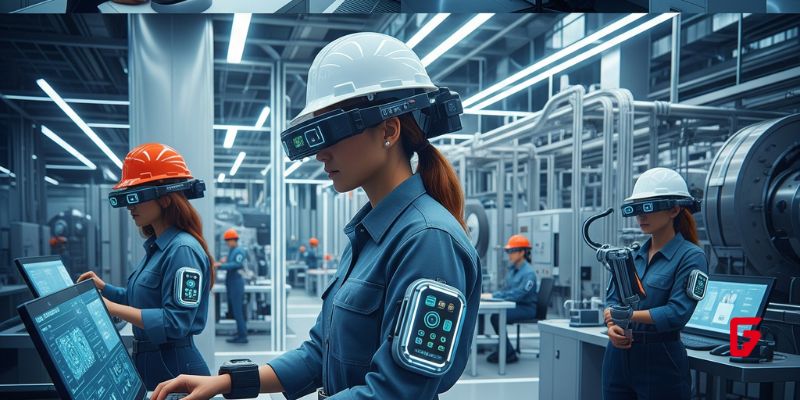
Furthermore, the integration of IoT and AI enables seamless communication between workers, supervisors, and safety teams, ensuring that critical information is shared in real-time, and that responses to potential hazards are swift and effective.
"The integration of IoT and AI is transforming the face of industrial safety, enabling real-time monitoring, predictive analytics, and proactive interventions that prevent accidents and ensure a safer work environment." — Juan Manuel Caro, Head of IoT and AI at Telefónica
- ✦ Real-time monitoring enables early detection of potential hazards and prevents accidents
- ✦ Predictive analytics enables organizations to identify areas of improvement and optimize their safety protocols
- ✦ Proactive interventions enable swift and effective responses to potential hazards
Implementing IoT and AI in Industrial Safety
[SECTION DIVIDER]Implementing IoT and AI-powered solutions in industrial safety requires a structured approach, involving several key steps. Firstly, organizations must identify their safety challenges and develop a clear vision for implementing IoT and AI-powered solutions.
Next, organizations must select the appropriate IoT and AI-powered solutions that meet their specific needs, considering factors such as scalability, reliability, and integration with existing systems.

Finally, organizations must develop a comprehensive training program for their workforce, ensuring that they are equipped to operate and maintain the new systems, and that they understand the benefits and limitations of IoT and AI-powered solutions.
Conclusion
[SECTION DIVIDER]In conclusion, the integration of IoT and AI in industrial safety is revolutionizing the face of workplace safety, enabling real-time monitoring, predictive analytics, and proactive interventions that prevent accidents and ensure a safer work environment.
By implementing IoT and AI-powered solutions, organizations can reduce the risk of accidents, improve operational efficiency, and create a safer, more productive work environment for their workers.
Future Outlook
[SECTION DIVIDER]As the industrial sector continues to evolve, it's essential for organizations to stay ahead of the curve and adopt the latest technologies that enhance safety and efficiency.
With the rapid advancements in IoT and AI, it's only a matter of time before we see widespread adoption of these technologies in industrial safety.
Final Verdict
[SECTION DIVIDER]The future of industrial safety is bright, and it's being shaped by the revolutionary work of Telefónica and Halotech in integrating IoT and AI-powered solutions.
As we move forward, it's essential for organizations to prioritize the adoption of these technologies, ensuring a safer, more efficient, and more productive work environment for their workers.
Call to Action
[SECTION DIVIDER]As you consider the adoption of IoT and AI-powered solutions in your industrial safety efforts, remember that the future of safety is now.
Join the revolution and shape the future of industrial safety with Telefónica and Halotech's innovative IoT and AI-powered solutions.
Comments
Post a Comment